BEAR-5 - April 24th, 2010
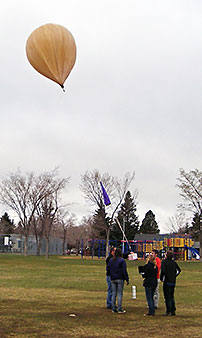
The launch was at 7:53:40 AM, the balloon burst at 9:34 AM at ≈ 92,359 ft. and the payload landed 14.1 miles away at 10:43:40 AM after a 2 hr. & 50 min. flight. This launch was for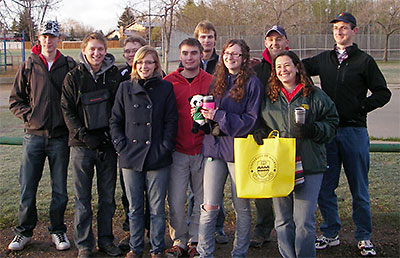 University of Alberta Physics students (right) who wanted to learn how we launch, track and recover high altitude balloon payloads which they plan to start doing themselves with various physics experiments aboard in the near future. The altitude reached was actually better then expected and quite
good considering that a 30 yr old surplus military balloon was used and especially one that had been handled by countless people over the years as it was handed down from one person to the next until finally ending up in our possession. Our predicted landing location was only 7 km (4.35 miles)
off and also quite good considering the balloon size, weight, rate of rise and many other variables where simply rough guesses.
University of Alberta Physics students (right) who wanted to learn how we launch, track and recover high altitude balloon payloads which they plan to start doing themselves with various physics experiments aboard in the near future. The altitude reached was actually better then expected and quite
good considering that a 30 yr old surplus military balloon was used and especially one that had been handled by countless people over the years as it was handed down from one person to the next until finally ending up in our possession. Our predicted landing location was only 7 km (4.35 miles)
off and also quite good considering the balloon size, weight, rate of rise and many other variables where simply rough guesses.
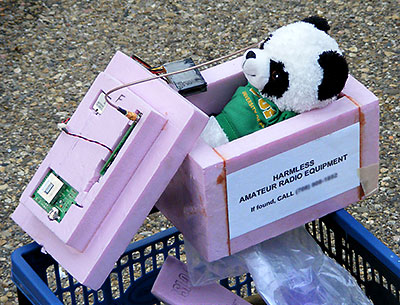
(left) The payload box and tracker were previously
used for the BEAR-4 video camera and used this time for the UofA women's sports panda bear the girls brought with them for a payload.
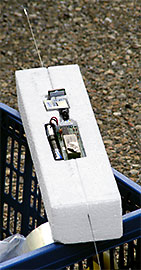
(right) A second identical tracker, that was used for BEAR-3, was also used to compare two slightly different antennas that were
being used for the first time.
For details & information about
the antennas used - see the
1/2 wave center-fed antenna page
|
|
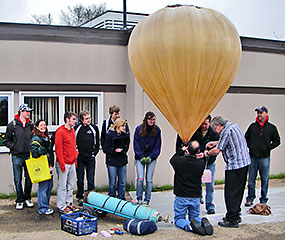
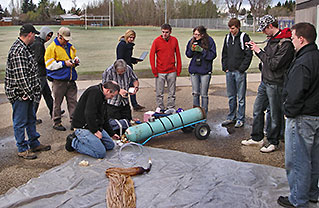 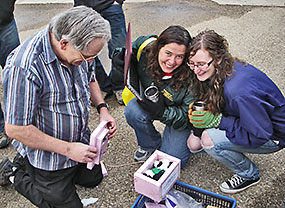 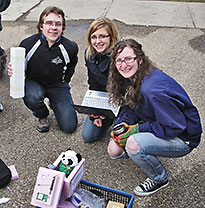 Everything was laid out in an area sheltered
from any wind by a school and I safely tucked the panda in. Everything was laid out in an area sheltered
from any wind by a school and I safely tucked the panda in. |
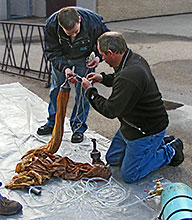  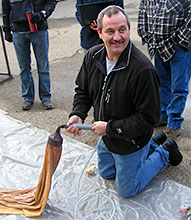 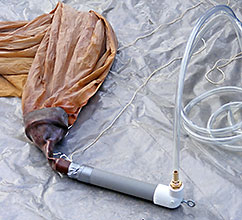
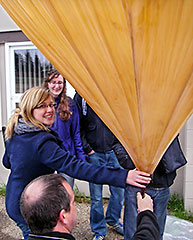
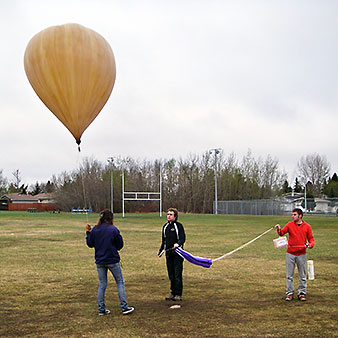
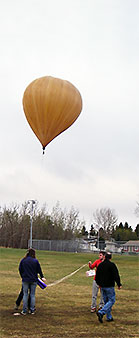
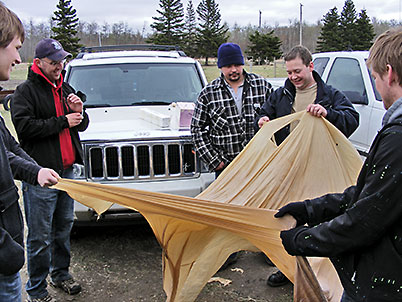
Garrett & James used a 'duck tape adapter' to fit the smaller then usual balloon neck to our filling tube and began filling the main balloon section. |
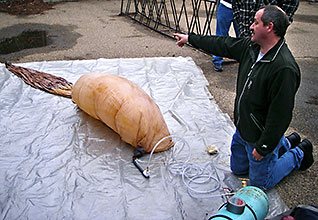 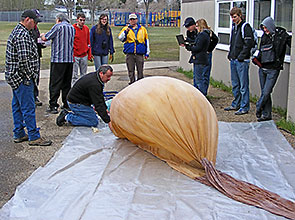
The balloon also had a second skirt section that the payload is normally attached to,
but, other then that, we didn't know how it was designed to be used exactly and if it should be also inflated or simply left as is. |
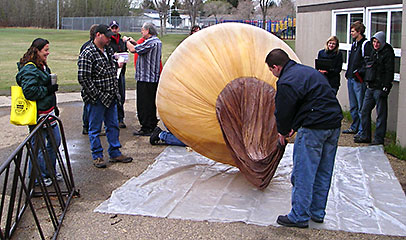 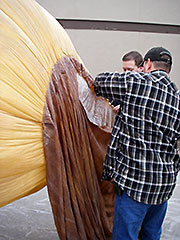
After the main section became buoyant and a fair amount of additional gas
was added it was clear much more would be needed to overcome the weight of the skirt so we removed it like many do with this type of balloon to make a much higher altitude possible. |
   |
 |
 |
|
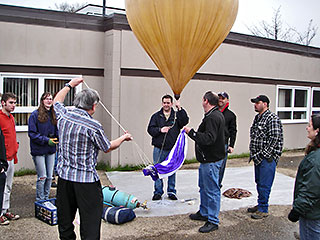
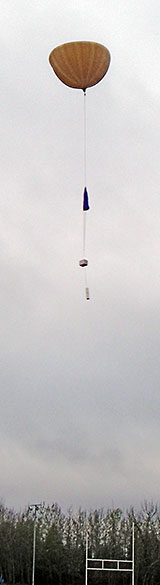
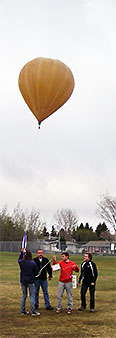
With the skirt removed there was already plenty of lift for the parachute and 2 payload containers which were then attached. Some of the students then walked the balloon assembly away from the school before releasing it and the balloon quickly acquired
a flattened top before disappearing above the mist which had appeared since arriving at the site.
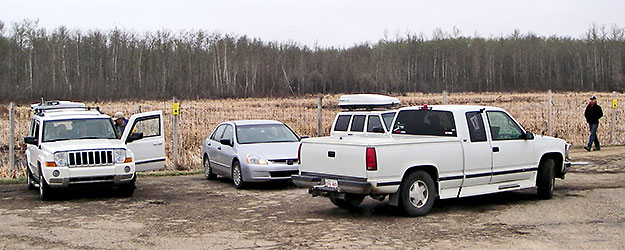 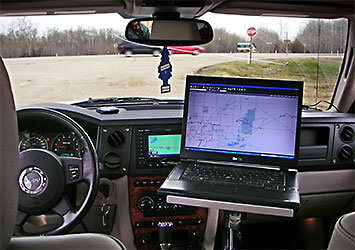 Above - one of the stops along the way while tracking the balloon using laptops with mapping software or Google Earth. Above - one of the stops along the way while tracking the balloon using laptops with mapping software or Google Earth.
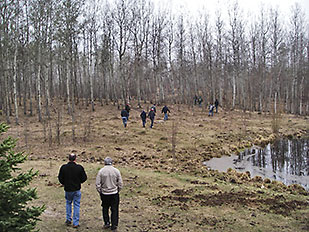 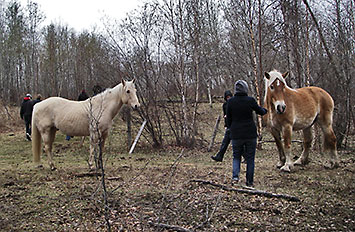 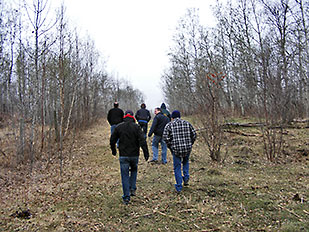 The balloon landed on private property about 1000
ft. from the road where we waited for it to land. We received permission from the property owner and hiked to where it landed encountering some friendly horses along the way. A cut line made the journey through the wooded area fairly easy, . . . . The balloon landed on private property about 1000
ft. from the road where we waited for it to land. We received permission from the property owner and hiked to where it landed encountering some friendly horses along the way. A cut line made the journey through the wooded area fairly easy, . . . .
|
 |
 |
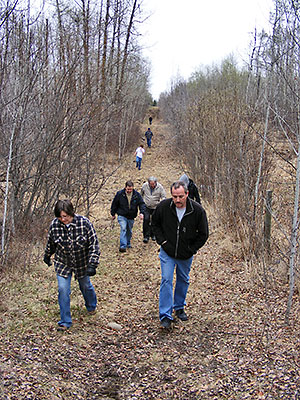
Above - Barbra, the property owner,
returning with James and everyone
to the tree.
Right - James begins chopping.
|
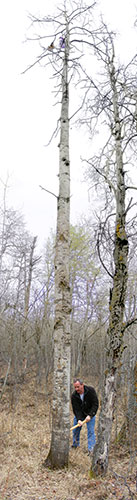 |
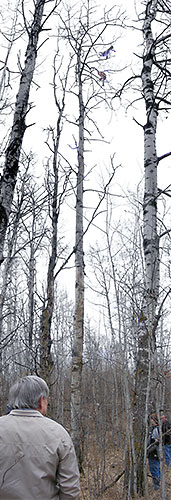
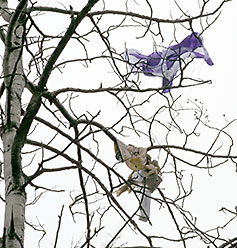
| but recovery was going to be difficult with everything found tangled up in the upper branches of a poplar tree about 45 ft. from the ground. Climbing the tree would require special equipment and after considering all the options the easiest
recovery method would be to simply cut the tree down so we headed back to check if this would be ok with the property owner and it was. But now the problem was where to get an axe or saw, but luckily the property owner sensed our need, lent us an axe and joined us for the fun as
we returned to the tree. |
|
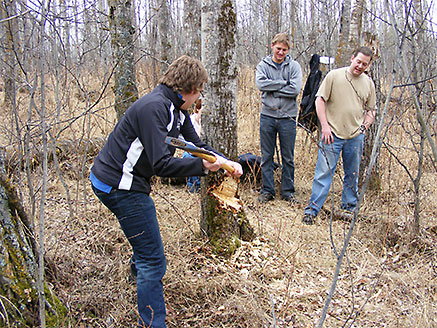 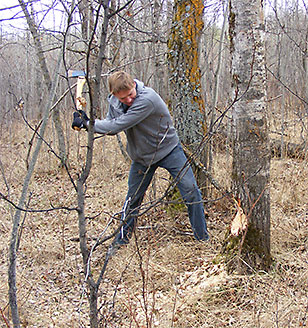 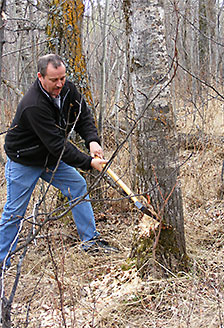 Chopping basically a dead wood
tree wasn't easy with less than an extra sharp axe, but the tree finally fell . . . . . . . . Chopping basically a dead wood
tree wasn't easy with less than an extra sharp axe, but the tree finally fell . . . . . . . .
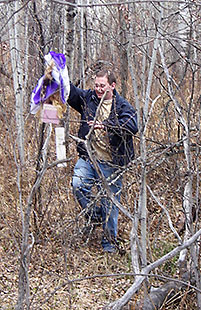 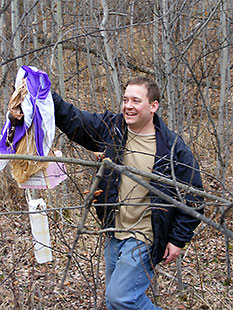
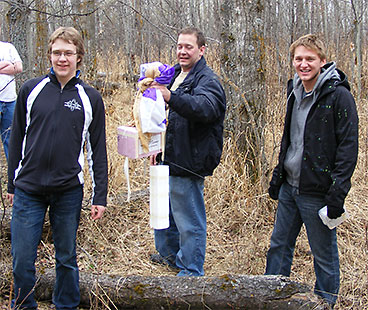
and everything was recovered in perfect shape.
HERE's a Map showing the flight path, KML files and some additional information.
|
|
 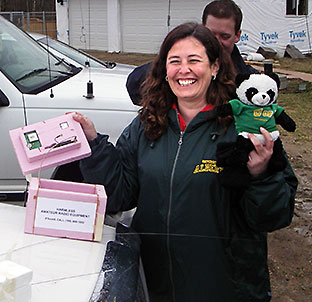 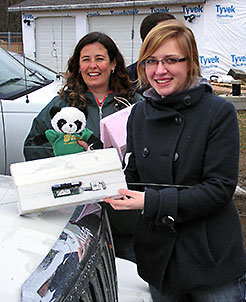 Back from the woods, the balloon
remnants are checked out, Laura is happy to find her panda bear made it back safe and sound, although a bit chilly, and displays the main tracker and Tanya displays the 2nd tracker also used to compare a different antenna. Back from the woods, the balloon
remnants are checked out, Laura is happy to find her panda bear made it back safe and sound, although a bit chilly, and displays the main tracker and Tanya displays the 2nd tracker also used to compare a different antenna.
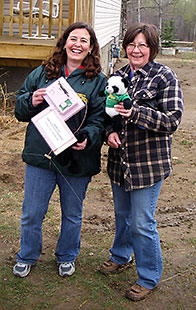  Left - Laura with Barbra who helped immensely and made it possible to recover everything by allowing
us to invade her land, lending an axe and allowing us to chop down one of her trees. Left - Laura with Barbra who helped immensely and made it possible to recover everything by allowing
us to invade her land, lending an axe and allowing us to chop down one of her trees.
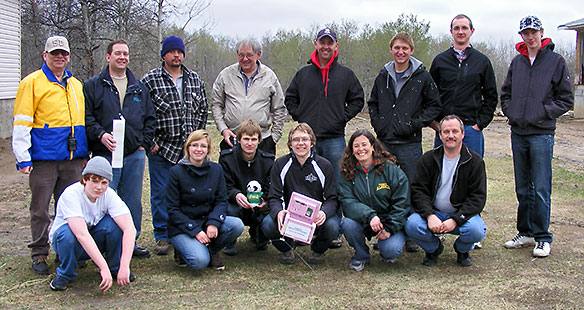
Right - A group photo after agreeing from now on we need to always come prepared with a chain saw & everything else one may need for any particular situation.
|
|